
Advanced Crushing Solutions by Kobesh Machine
With decades of continuous experience in the design and manufacturing of crushing equipment, kobesh machine is recognized as a leading manufacturer in the mining and asphalt industries.
Having successfully installed thousands of crushing machines worldwide, kobesh machine has built a strong reputation for reliability, performance, and engineering excellence across mining, road construction, and asphalt plant projects.
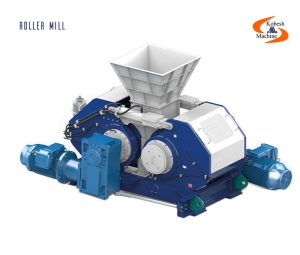
Roller Mill
Brief Product Description A Roller Mill is an industrial machine designed for the grinding and processing of various materials, especially those requiring precise and controlled particle size reduction. This mill utilizes rotating rollers that move at different speeds or in opposite directions, trapping materials between them and reducing them to finer particles through shear and compressive forces. Roller Mills are widely used in industries such as grain processing (flour milling), chemical industries, pharmaceuticals, food production (like grinding sugar or cocoa into powder), and recycling. These machines are considered ideal for precise processes due to their high accuracy in controlling the final product size and preserving material properties.
Structural Features Roller Mill
- Precision Roller System: Consists of two or more rollers, typically made of wear-resistant steel or special alloys, with adjustable spacing between them.
- Adjustable Roller Speed: Ability to individually adjust the rotational speed of each roller for precise control of the shear and compressive forces applied to the material.
- Automatic Feeding System: Usually equipped with a feeder that uniformly guides materials between the rollers.
- Adjustable Roll Gap: The distance between the rollers can be changed to achieve different particle sizes of the product.
- Robust and Vibration-Dampening Body: Constructed from cast iron or strong steel, with bases designed to minimize machine vibration.
- Cooling System (in some models): To control temperature in sensitive processes where heat may be generated.
- Hygienic Design (for specific applications): In food and pharmaceutical industries, utilizing stainless steel and a washable design.
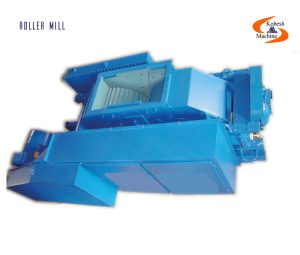
Roller Mill
Mechanism of Operation Raw materials are fed into the space between the rotating rollers via the feeding system. The rollers rotate at set speeds (often one faster than the other, or in opposite directions). As material enters between the rollers, the compressive and shear forces generated by the rollers’ movement crush and reduce the size of the material’s particles. The precise gap between the rollers determines the final particle size of the product. Materials that are sufficiently ground pass through the rollers and are discharged via the outlet system. This process can be repeated in multiple stages to achieve very fine and uniform powders or particles.
Build Specifications Roller Mill
- Roller Material: Wear-resistant steel, chromium steel, or stainless steel (depending on application).
- Body Material: Gray cast iron, ductile iron, or alloy steel.
- Motor: Standard industrial electric motors with variable speed control (inverter).
- Bearings: High-quality industrial bearings with high load capacity.
- Drive System: Belt and pulley, direct coupling, or gearbox.
Component Introduction Roller Mill
- Component Descriptions
- Rollers / Grinding Rolls: The primary cylindrical components that perform the grinding action.
- Main Body / Frame: The main structure of the machine on which the rollers and other components are mounted.
- Feeding System: A mechanism for uniformly feeding materials between the rollers (e.g., hopper, screw feeder).
- Electric Motor: The power source for driving the machine.
- Drive System: Includes belts, pulleys, couplings, or a gearbox for transmitting power to the rollers.
- Roll Gap Adjustment Mechanism: Includes screws, springs, or hydraulic systems for precise adjustment of the distance between the rollers.
- Bearing Housing: The unit that holds and supports the bearings.
- Scraper Blade (Optional): Used to clean adhered material from the roller surfaces.
We are a parts manufacturer, contact us for parts procurement As a manufacturer of Roller Mill spare parts, we produce a wide range of high-quality rollers made from the finest wear-resistant alloys, along with other critical components for your machine. Ensuring the quality of parts guarantees the service life and operational efficiency of your Roller Mill. Please contact us for price inquiries and to order the parts you need.
Projects Roller Mill
- Description: Our Roller Mills have been successfully utilized in numerous projects across grain industries (for producing various types of flour with controlled particle sizes), chemical industries (grinding raw materials), pharmaceutical industries (processing pharmaceutical raw materials), and food production (such as producing powdered sugar, cocoa powder). The high grinding precision, fine adjustment capabilities, and the ability to preserve material quality make these machines a reliable choice for projects requiring precise and high-quality processing.
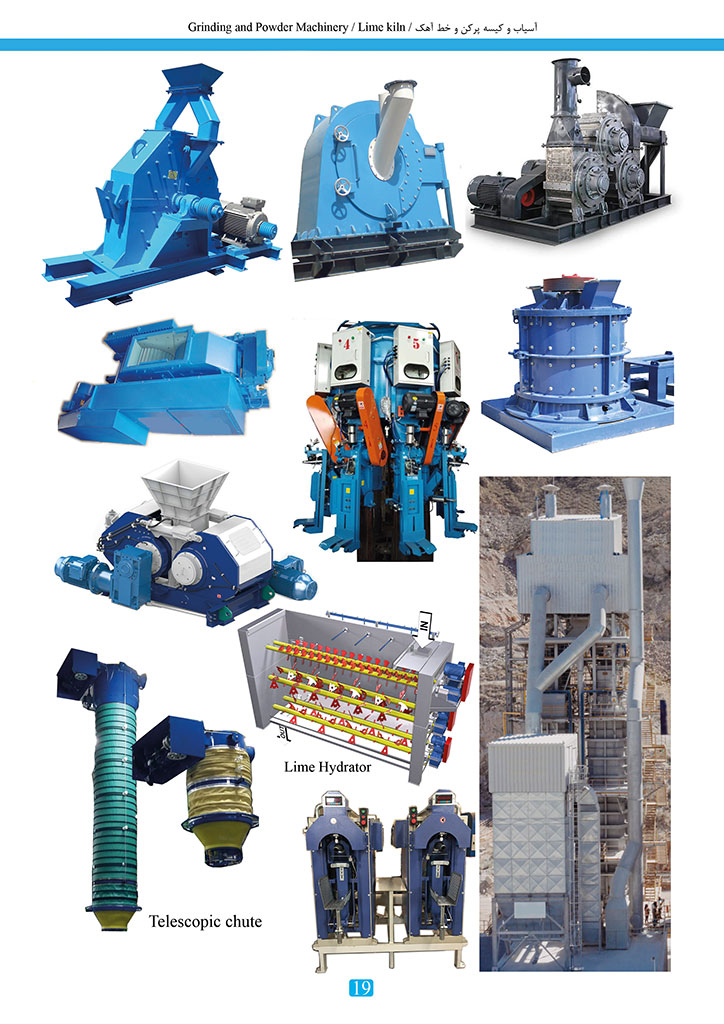
Kobesh Machine stands as a symbol of durability, high productivity, and secure industrial investment.
Contact Us
To receive tailored technical consultation, review high-capacity models, and select the most suitable solution aligned with the scale of your investment, please contact our executive team directly:
Sales Manager: +98 912 661 4519 — Alipour
R&D and Engineering Manager: +98 912 365 7790 — Alipour
Our specialists are ready to support you from technical evaluation to final equipment selection for large-scale and international projects.
Take control of crushing power—secure the future of your project.