
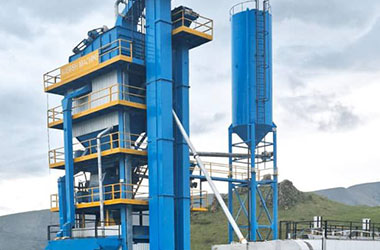
🛣️ How an Asphalt Batch Plant Works — The Science Behind High-Quality Road Construction
Modern road infrastructure depends on precision, efficiency, and environmental responsibility. At the heart of this process lies the asphalt batch mixing plant—a highly engineered industrial system designed to produce uniform, durable asphalt mixtures for highways, airports, industrial yards, and urban streets.
This guide explains—step by step—how an asphalt plant operates, how quality is maintained at every stage, and why advanced plant design is essential for today’s construction demands.
⚙️ Overview of the Asphalt Production Process
An asphalt batch plant transforms raw aggregates and bitumen into a controlled, homogeneous mixture through a series of automated stages:
✅ Cold aggregate feeding
✅ Drying and heating
✅ Dust collection & pollution control
✅ Screening and hot storage
✅ Precise weighing
✅ Mixing
✅ Storage and truck loading
Every phase is optimized for output consistency, fuel efficiency, and emission reduction.
🪨 Cold Aggregate Feeding System
Production begins with cold aggregate bins, typically arranged in multiple compartments to store different stone sizes.
Each bin is equipped with:
Variable-speed belt feeders
Flow-control gates
Gathering conveyor belts
📌 Purpose: Deliver the correct proportion of raw materials continuously and accurately into the drying system.
This stage sets the foundation for batch precision and final asphalt gradation.
🔥 Drying & Heating Drum
Aggregates are transported to a rotary dryer drum, where moisture is removed and materials are heated to optimal mixing temperature.
The drum usually contains three zones:
🔹 Conditioning Zone
Material enters and begins tumbling for uniform exposure.
🔹 Combustion Zone
A high-efficiency burner rapidly raises temperature.
🔹 Discharge Zone
Hot, dry aggregates exit toward the screening tower.
🎯 Engineering Goal: Maximum thermal efficiency with minimum fuel consumption.
🌿 Pollution Control & Dust Collection
Environmental compliance is critical in asphalt manufacturing.
Exhaust air from the dryer passes through:
Pre-separator chamber (for heavy particles)
Baghouse filter system
Induced-draft fan
Fine dust particles adhere to fabric filter bags and are periodically removed using reverse-air or pulse-jet cleaning mechanisms.
Collected dust is:
✔️ Recycled into the mix
✔️ Stored in dust hoppers
✔️ Conveyed via screw systems
♻️ Result: Reduced emissions, material reuse, and cleaner plant operation.
🚀 Hot Aggregate Elevator & Vibrating Screen
Dried aggregates are lifted by a bucket elevator into the screening deck.
There, multi-deck vibrating screens separate stone into different size fractions before depositing them into hot storage bins.
Benefits include:
Accurate gradation
Easy screen replacement
Stable feed to weighing hoppers
📊 This classification step ensures recipe-level consistency for every batch.
⚖️ Aggregate, Bitumen & Filler Weighing
Each component is measured independently:
🪨 Aggregates
Released from hot bins into weighing hoppers.
🛢️ Bitumen
Pumped from heated tanks into insulated weigh vessels.
🧂 Mineral Filler
Transferred from dust silos for fine-particle balance.
All weights are controlled digitally through PLC-based automation systems to meet strict mix design tolerances.
🎯 Accuracy at this stage = pavement durability.
🔄 High-Intensity Mixing System
Once dosed, materials enter the mixer—typically twin-shaft or pugmill design.
Specially engineered paddles:
Distribute bitumen evenly
Coat mineral surfaces
Prevent segregation
Shorten cycle times
Within seconds, the mixture becomes uniform, workable, and ready for discharge.
🔥 The result: asphalt with superior adhesion, stability, and fatigue resistance.
🏗️ Storage Silos & Truck Loading
Fresh asphalt is released from the mixer into insulated storage silos, preserving temperature until transport.